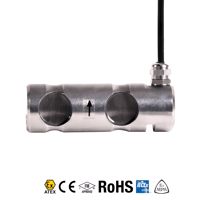
Load Pin
Load pin load cells replace a standard clevis pin, axle, or shaft in an existing joint to measure force at the connection without redesigning the structure. Strain gauges inside the pin measure the shear force across it and convert it into an electrical signal for an amplifier or indicator. We carry ANYLOAD load pins in stainless steel.
Where Load Pins Are Used
Load pins are ideal for applications where monitoring a force on a joint or junction is important but space for a separate sensor is not available. They are popular for crane sheaves and booms, hoists and winches, shackles and rigging, and they provide overload protection on lifting equipment. Stainless steel models also work well on outdoor and marine equipment.
Using a Load Pin Load Cell
- Fit: the pin must match the diameter, length, and tolerances of the joint it replaces.
- Load direction: a load pin measures force in one direction, so maintaining its orientation is imperative. A keeper plate or similar locking feature stops it from rotating.
- Capacity: choose one that accommodates the maximum working load, plus the overload margin your lifting or safety standards require.
Measuring tension in a straight line instead? See our tension links. To compare load pins with other designs, see Choosing the Right Load Cell for Your Job.
Ordering through our online store is simple, fast, and secure. If your joint needs a different size, or you need help choosing a load pin, please contact us.
Showing the single result