
The following paper was provided by the Colorado School of Mines as an example of the use of the Tacuna Systems EMBSGB200 amplifier in practical research applications.
Project Technical Profile
- Client / Partner: Colorado School of Mines (CSM Senior Design) & N-Science Corp
- Application Category: Aerospace Engineering & Cryogenic Propellant Mass Gauging
- The Space Logistics Challenge: Overcoming low-gravity fluid shifts and spacecraft attitude errors to reliably calculate remaining fuel mass inside orbital satellite propellant depots.
- The Acoustic Approach: Treating the propellant tank and fluid as a dynamic harmonic oscillator, using multi-axis sine-wave chirp excitations (80–800 Hz) to isolate resonant frequencies and precisely chart fluid fill fractions.
- Hardware Solutions: Symmetric multi-axis test vessels instrumented with multi-point high-gain strain gauge arrays, triaxial accelerometers, and the Tacuna Systems EMBSGB200 Load Cell and Strain Gauge Amplifier sampled via a LabVIEW data acquisition loop.
Propellant Tank Mass Gauging Test Apparatus Development
Ted Agerton
Colorado School of Mines, Senior Design
N-Science Corp
In Cooperation with: Chris Dreyer (CSM), Daniel Ladner, Daniel Scheld (N-Science)
Co-authors: Martin Cowell, Peter Furness, Margaret Hunt, Nadine Janecek, Tyler King, Sarah Spangler
N-Science Corp and the Colorado School of Mines have combined efforts to outfit a propellant tank with novel gauging to measure tank fluids in space. This research is designed to be used in satellites and spacecraft propellant depots.
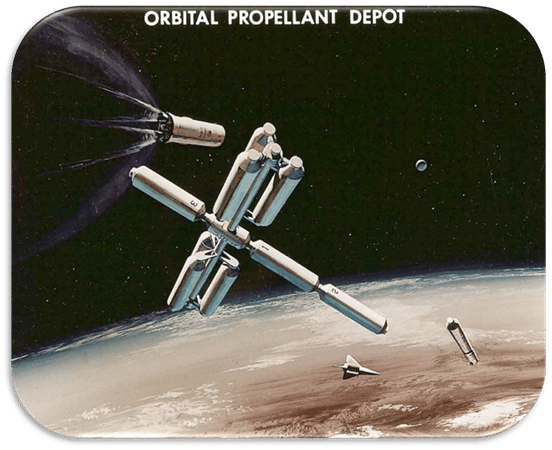
Current methods involve burn time integration, optical, capacitance, thermal, and level gauges. However, NASA has called for new methods of mass gauging due to inadequacies of current methods which can be subject to errors from spacecraft attitude (when in weak gravity), calculation cost, slow reaction time, etc. The new initiative is to pursue direct measurement of mass and/or volume to eliminate some sources of error.
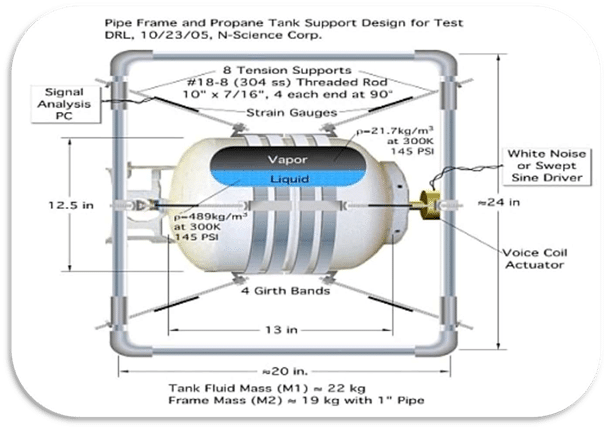
The novel N-Science Concept treats the tank and fluid as a harmonic oscillator. Resonant frequency has a strong correlation to mass and assumes fluids act like a solid body at frequencies greater than sloshing.
System 1.0 Vertical Suspension Testing
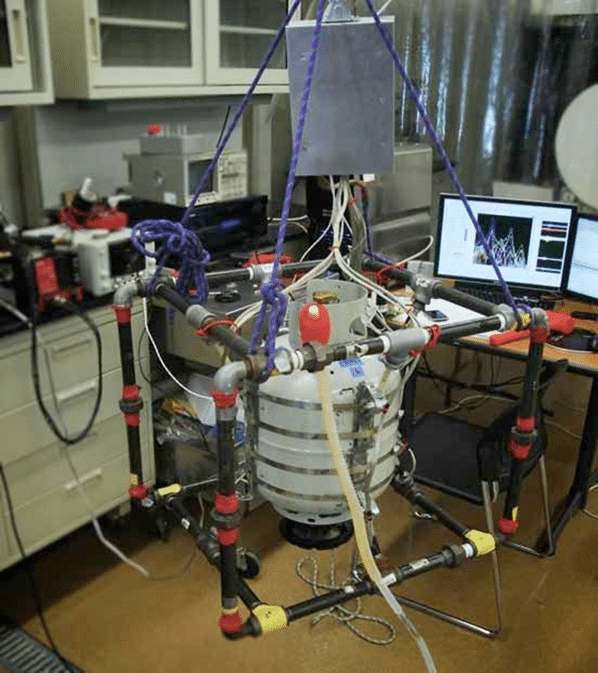
Instrumentation:
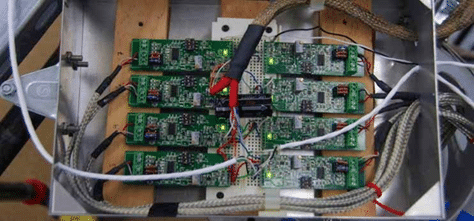
9 amplified (2200x) strain gauges using Tacuna Systems EMBSGB200 amplifiers sampled at 4000 samples/second using LabVIEW
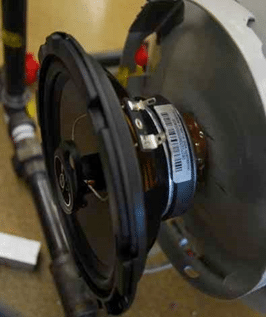
Large car audio speaker + amp providing excitation of a chirped sine wave (80-800 Hz)
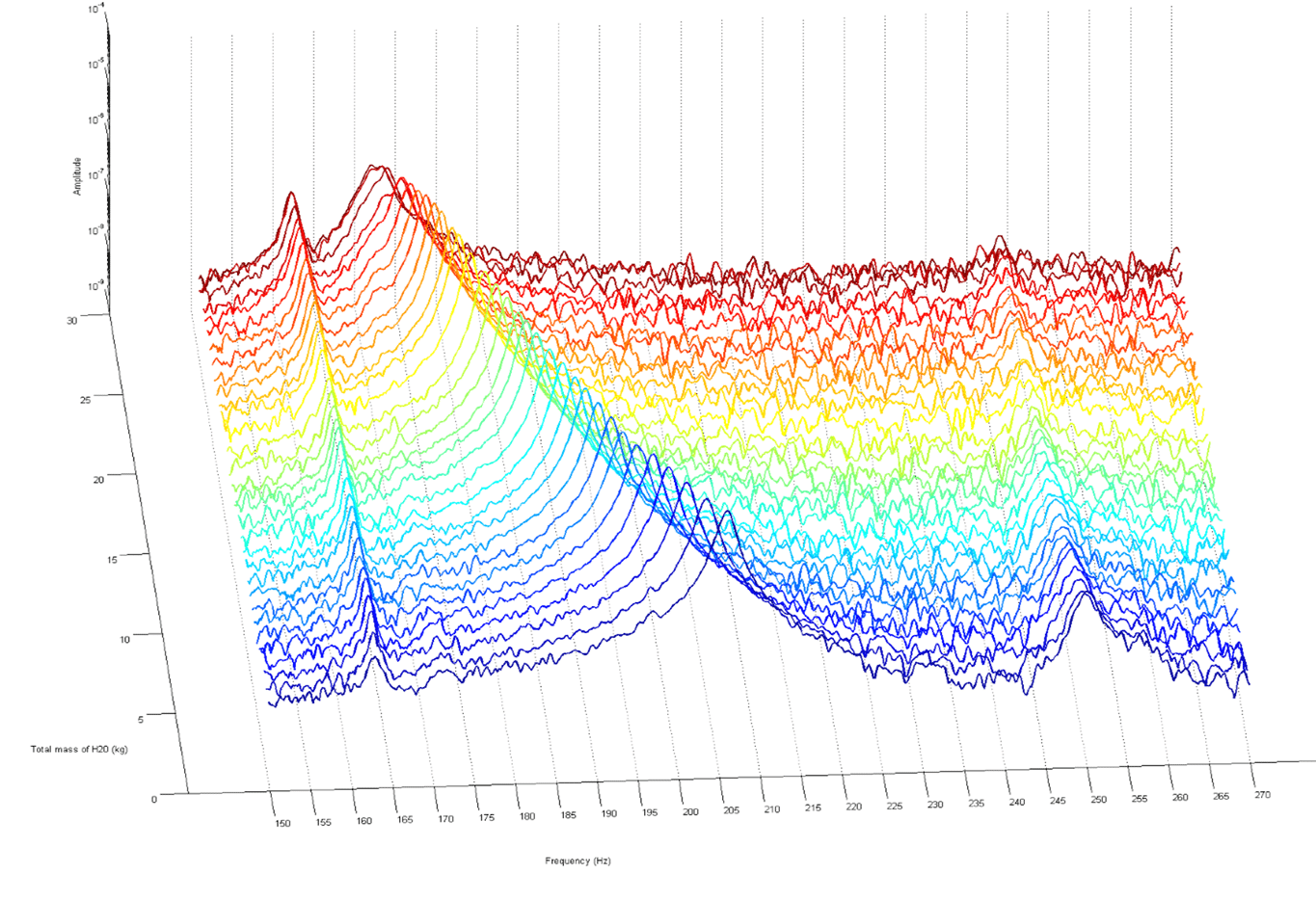
Resulting data showed strong correlation between tank mass and resonant frequency.
System 2.0 Spherical Vessel Testing
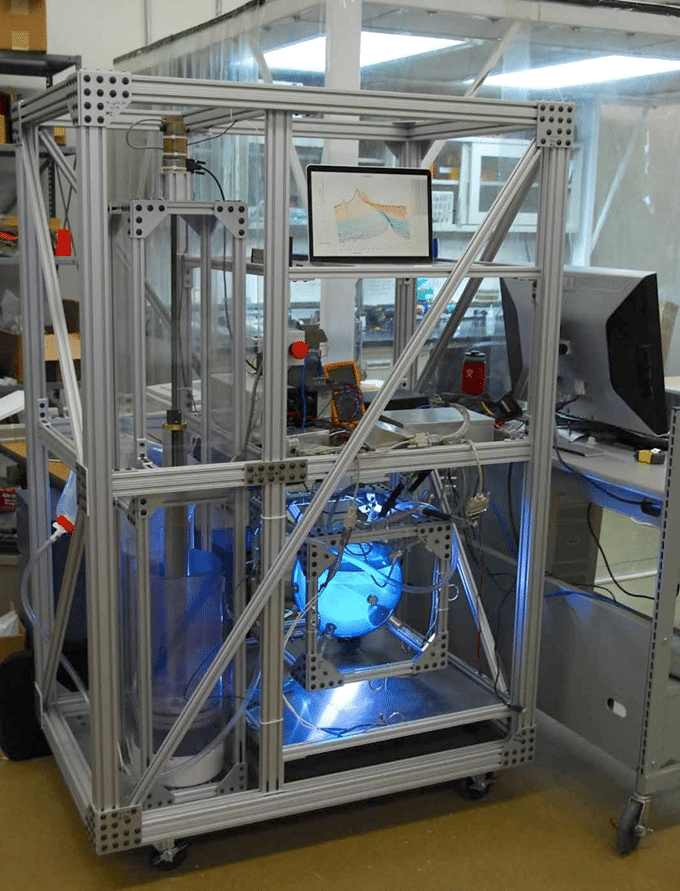
We designed a symmetrical tank to eliminate angle dependence and use multi axis excitation to ensure accurate spatial frequency response.
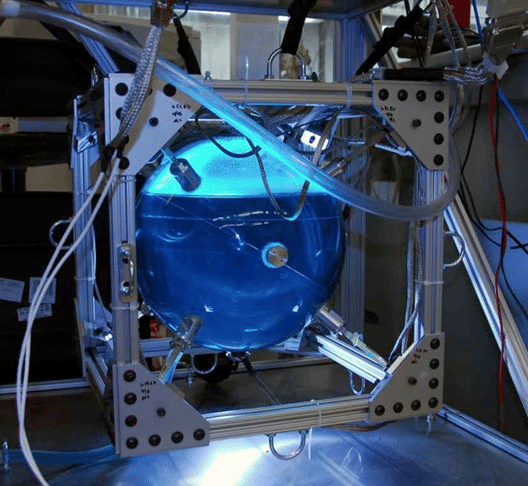
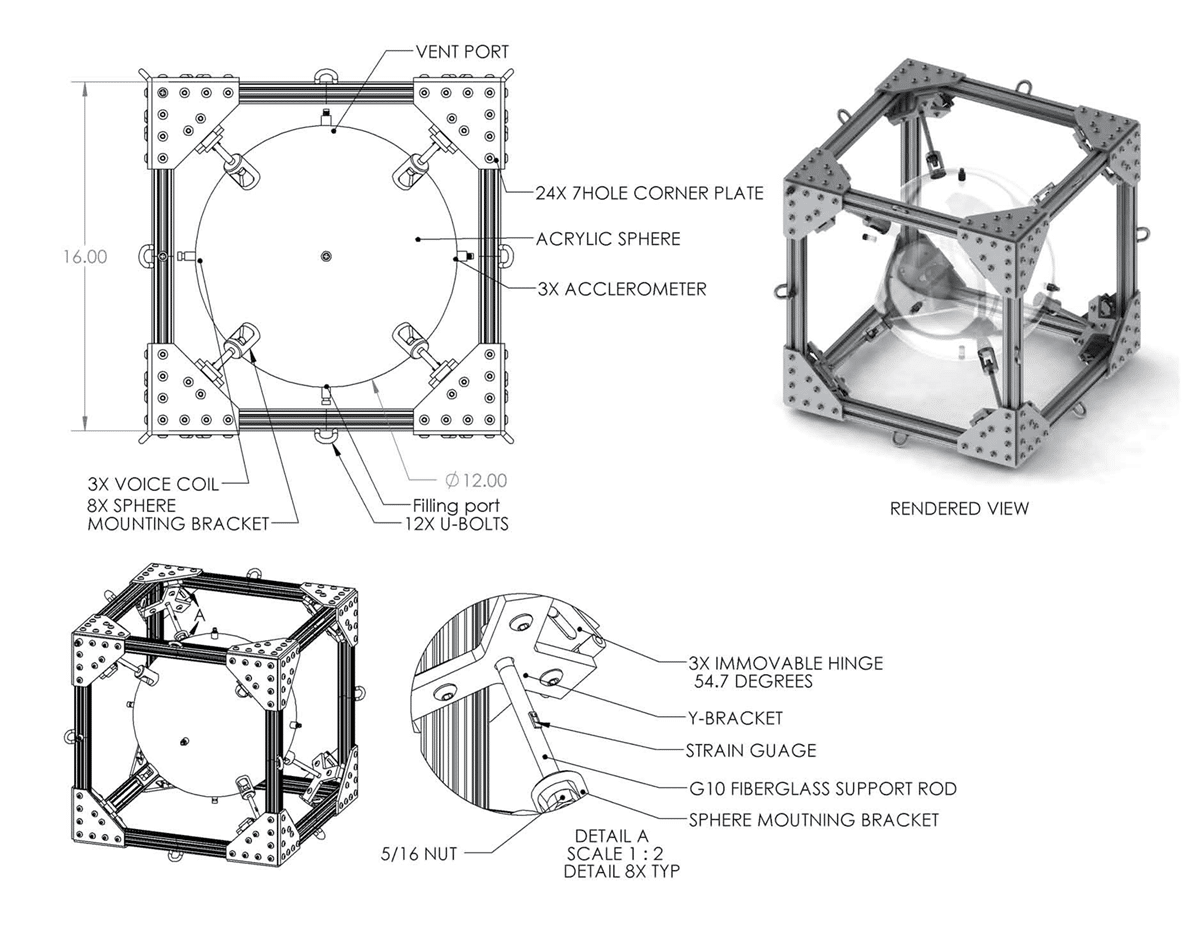
Instrumentation:
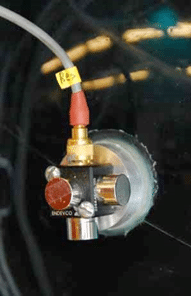
Triaxial accelerometers
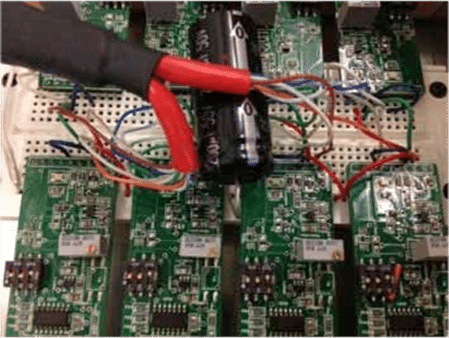
8 amplified (2200x) strain gauges using Tacuna Systems EMBSGB200 amplifiers sampled at 4000 samples/second using LabVIEW
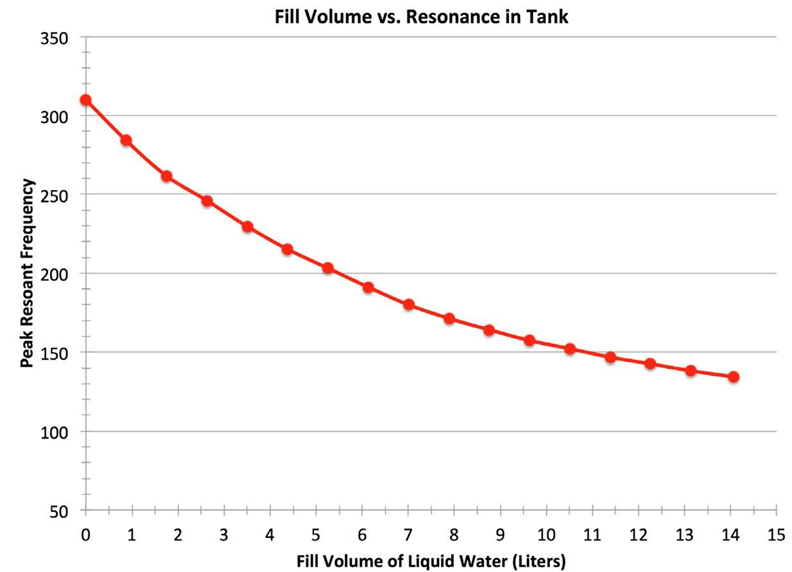
Results:
The use of the symmetrical tank removes angle dependence. As suggested in the first iteration of the resonance experiment, the version 2.0 data shows a strong correlation between fill fraction and resonance. However, this second version showed this correlation exists at any angle.
Tacuna Systems in the Classroom
This case study illustrates how an innovative, student-led experimental design solves critical deep-space logistical hurdles. Tacuna Systems remains deeply committed to fueling high-level academic collaboration and breakthrough industrial research. To make industrial-grade signal conditioning tools accessible for university lab work and aerospace prototyping, we provide a dedicated Tacuna Systems Educational Discount. Contact our engineering team today to see how we can help with your department’s next instrumentation configuration.