

A load cell is simply a transducer. That is, it is a device that converts a physical force into a measurable electrical signal. From the high-precision requirements of aerospace testing to the durability demands of agricultural weighing, load cells are the work-horse devices that make industrial control systems and data collection possible. This guide provides an overview of the five primary load cell technologies, how they function, and how to identify the right category for your specific application.
Key Takeaways
- The Basic Concept: Load cells convert forces to usable data. Not only do they take measurements, but they also provide essential data for control systems in industrial processes.
- The Strain Gauge Industry Standard: Most industrial systems use strain gauge sensors since they offer the best balance of precision, durability, and cost-effectiveness across nearly any application.
- Intrinsically Safe Alternatives: In hazardous environments where electrical components pose an explosion risk, hydraulic and pneumatic cells offer a safe, non-electric alternative.
- The Choice for Hygenic Environments: Capacitive sensors are often the optimal choice for sterile or washdown environments as they can be hermetically sealed without loss of accuracy.
- Capturing Dynamic Forces: For high-frequency events such as impacts or vibrations, piezoelectric transducers are ideal; however, since they undergo signal decay, they cannot be used for static weighing.
What is a Load Cell?
A load cell is a transducer or sensor that converts the kinetic energy of a force into a quantifiable output, such as an electrical signal. Without this energy conversion, a force would not be measurable. Since load and force measurements are fundamental to many industrial processes, load cells form an integral part of modern commerce.
How Do Load Cells Work?
Each load cell type exploits some physical property (electrical resistance, fluid pressure, capacitance) of its component materials to generate an output proportional to the applied force. Mechanical or electrical devices then convert the load cell’s output to a human-usable form, such as a human-readable display, stored data, or an input signal to control systems.
How Are Load Cells Used?
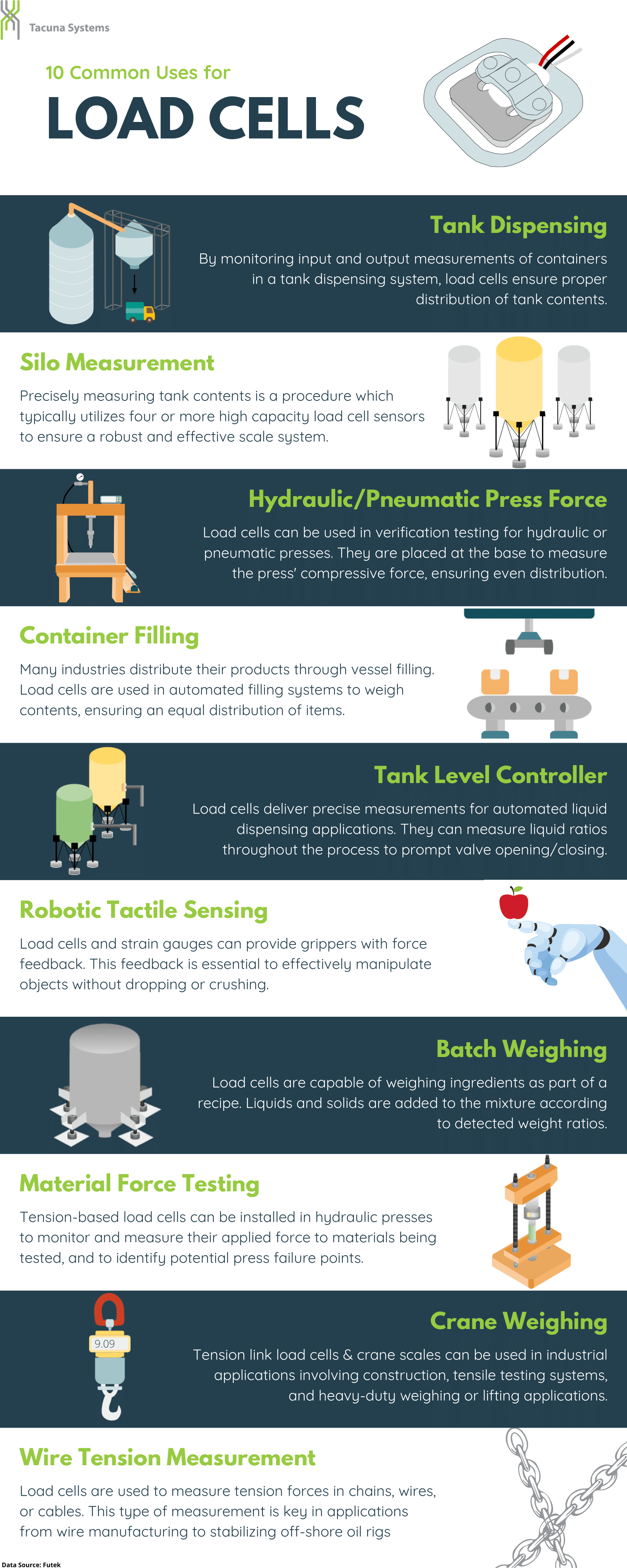
Load cells are most commonly used in industrial weighing applications such as scales. They are also the critical component in many automated feedback loops. In these systems, the load cell’s real-time data allows a machine to “sense” and adjust its own behavior. For example, in a cable-winding machine, a load cell constantly monitors tension. If the tension fluctuates, the sensor sends an immediate signal to the motor controller to adjust the speed. This continuous loop ensures the process remains consistent, preventing cable breakage or uneven spooling without human intervention.
Types of Load Cells
Several types of load cells exist for a wide range applications:
- Strain Gauge Load Cells
- Hydraulic Load Cells
- Pneumatic Load Cells
- Capacitive Load Cells
- Piezoelectric Transducers
We’ll cover the science behind each, their operational tradeoffs, and their ideal uses.
1. Strain Gauge Load Cells: The Standard for Precision and Versatility
Engineering Principles and Components of Strain Gauge Load Cells
The strain gauge load cell is a passive transducer (meaning it needs external power) that converts mechanical deformation into a change in electrical resistance. Its core is the “spring element” (or “elastic element”), a precision-machined metal body designed to flex predictably under a specific load. Bonded to this element are one or more strain gauges: ultra-thin wires in back-and-forth patterns on a non-conductive substrate that stretch or compress with the metal’s deformation.
When the gauges compress or stretch, their change in cross-sectional area creates a corresponding change in resistance. Wiring these gauges into a Wheatstone Bridge circuit allows this change to be measured and leveraged for load detection. An input, or excitation voltage, applied under loaded conditions creates a measurable electrical imbalance at the bridge output proportional to the load.
The article, The Versatile Strain Gauge Load Cell explains this internal circuitry in more detail. It also describes the main strain types of spring element geometries.
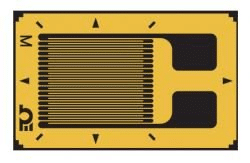
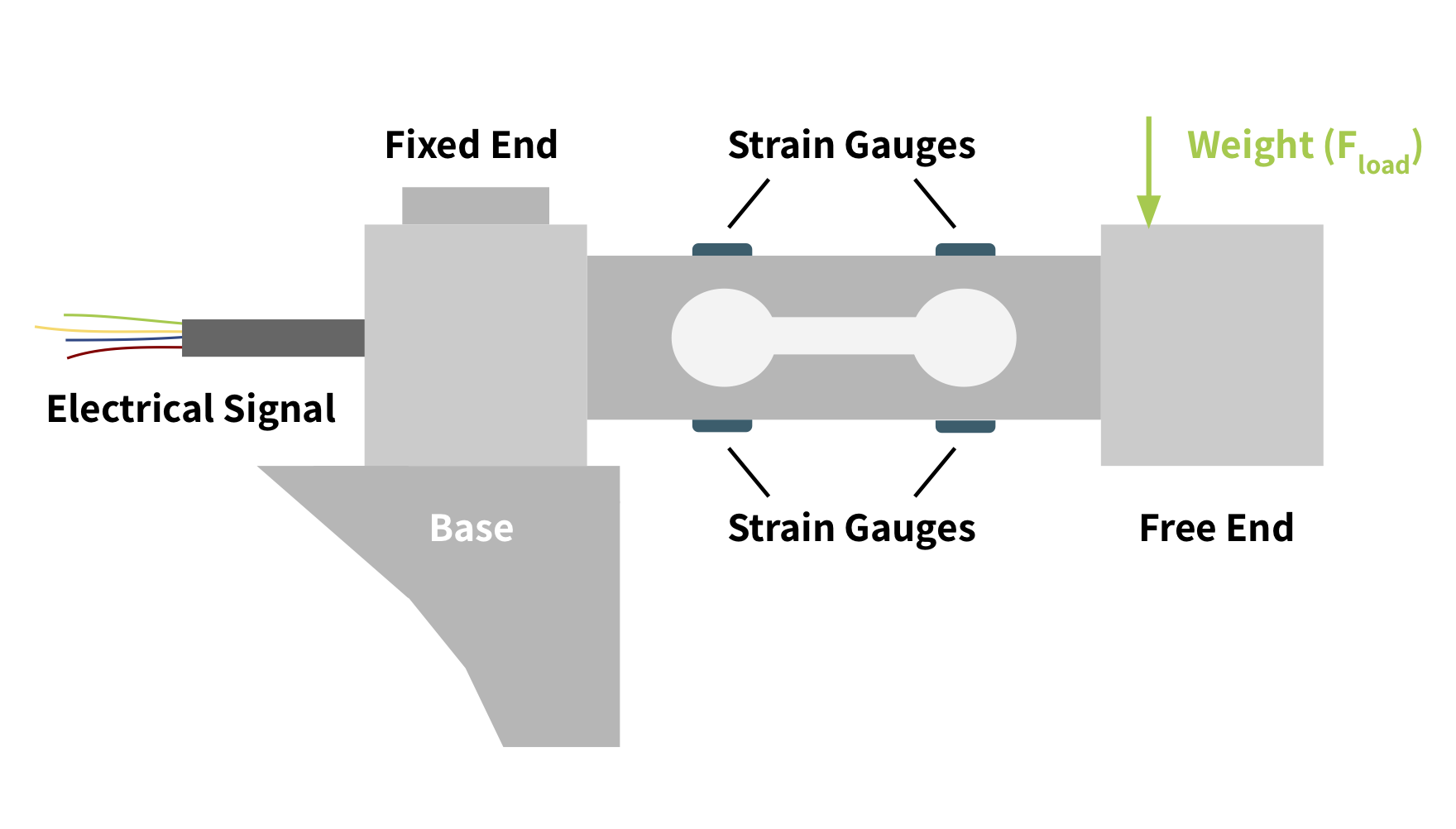
Figure 2 shows a single-end beam load cell. The spring element consists of the fixed and free ends and the machined beam in between. Under loaded conditions, the strain gauges along the top are in tension (stretched), while those at the bottom are compressed. Both the excitation voltage and output signal travel through the cable depicted on the left.
Operational Tradeoffs and Ideal Uses of Strain Gauge Load Cells
The Advantages: Since these devices come in a wide variety of shapes and mounting configurations, the possible load directions (and therefore measuring applications that use them) are numerous. Strain gauge load cells are an industry favorite for this reason, as well as for their accuracy and cost-effectiveness. They offer a high-frequency response to dynamic loads, and high-quality ones are not sensitive to temperature variations.
The Constraints: Because strain gauge load cells are passive transducers, they are not practical where electrical power is unavailable. Likewise, they do not lend themselves to potentially explosive or flammable environments. Also, users should be aware that since their output is of the order of millivolts, they require EMI shielding and output signal conditioning to produce clean data.
2. Hydraulic Load Cells: The Intrinsically Safe Option
Engineering Principles and Components of Hydraulic Load Cells
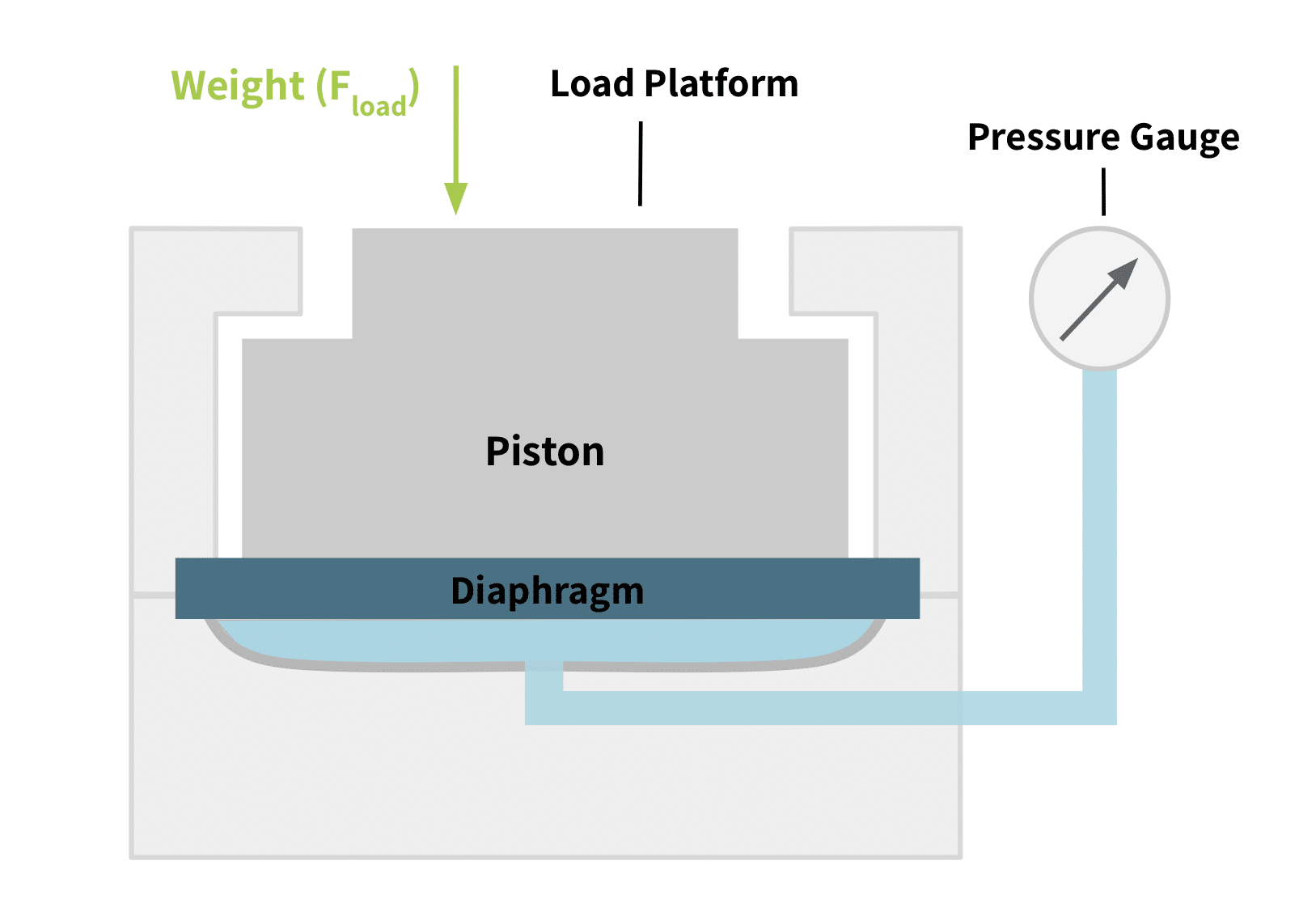
Hydraulic load cells function as a closed-loop pressure system, depicted in Figure 3. The load acts upon a piston connected to a platform, which in turn presses against a flexible, elastic diaphragm. This diaphragm seals a chamber filled with a specialized hydraulic fluid (typically oil).
Under a load, the fluid pressurizes proportionally to the force. This pressure travels through a tube to a Bourdon tube or a precision pressure gauge for readout. Because the entire measurement process is mechanical and fluid-driven, the system requires no electrical components at the point of measurement. Hydraulic load cells can typically measure up to 5MN and have an accuracy of about 0.25 to 1.0 percent of full-scale output (FSO). Their resolution is typically about 0.02 percent.
Features, Benefits and Disadvantages of Hydraulic Load Cells
The Advantages: Since they contain no electronics, hydraulic cells are the best choice for hazardous environments with a high risk of explosion (ATEX/Class 1 zones), or areas where external power is inaccessible. They are also insensitive to lightning strikes and massive electrical surges that would permanently damage a strain gauge system.
The Constraints: Hydraulic load cells tend to be more expensive than other types, making them impractical for high-volume or low-budget applications. They also have a drawback of thermal sensitivity. Hydraulic fluid expands or contracts with ambient temperature changes, which can lead to “zero drift”, where the scale shows a reading even when unloaded. In outdoor installations, this requires frequent re-zeroing or the use of temperature-compensated fluid systems. At 0.25-1% of FSO, their accuracy is lower than that of strain gauge load cells.
3. Pneumatic Load Cells: The High-Sensitivity, “Clean” Option
Engineering Principles and Components of Pneumatic Load Cells
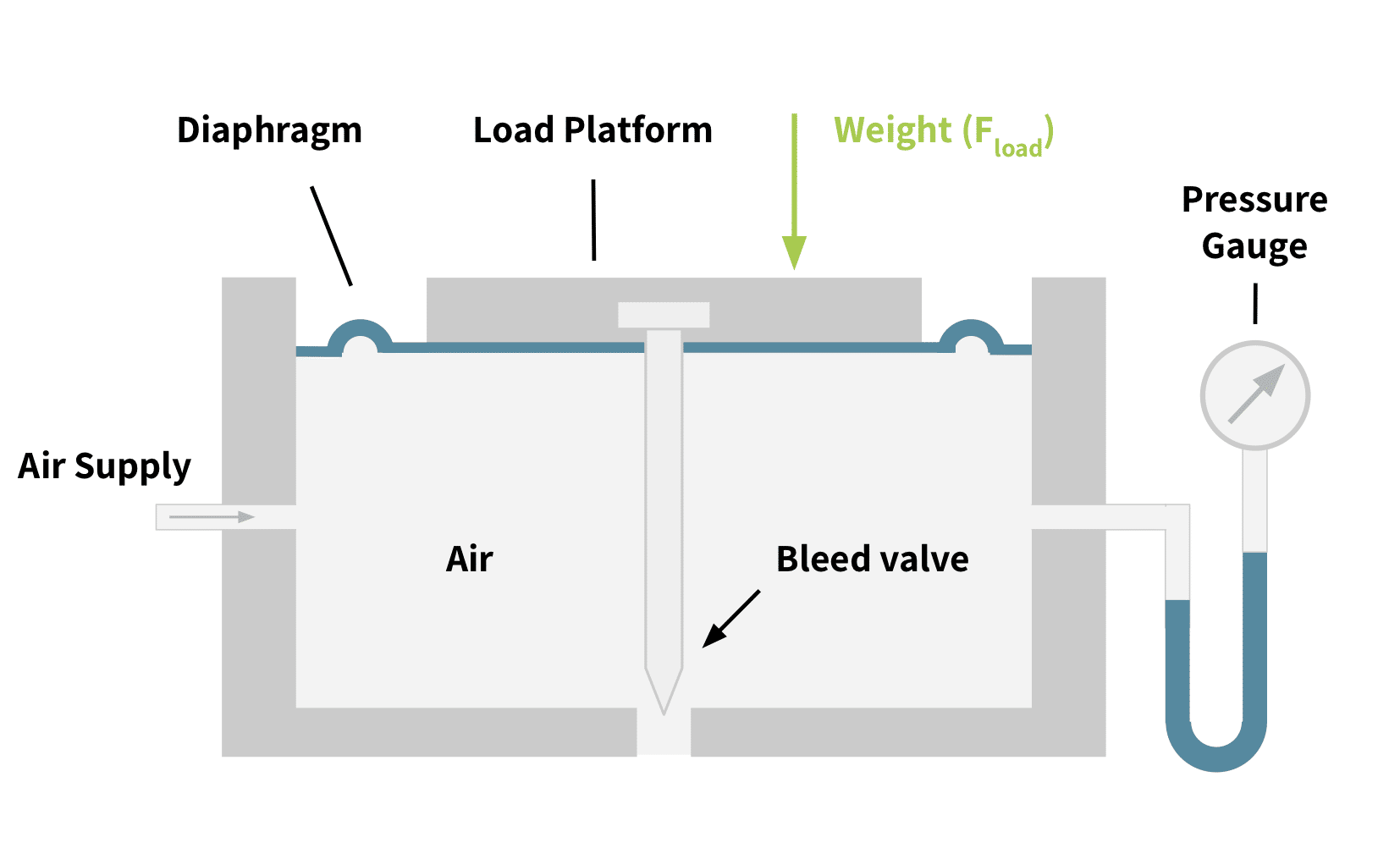
Pneumatic load cells operate on a force-balance principle. The load is applied to one side of a flexible, high-precision diaphragm, while a regulated supply of pressurized air is introduced to a chamber on the opposite side.
As the load pushes down, a nozzle (or bleed valve) allows a small amount of air to escape until the internal pressure perfectly balances the applied force. The system then measures this “balancing pressure,” which is directly proportional to the load. Because gas is much more compressible than liquid, these sensors can detect incredibly small changes in weight.
Features, Benefits and Disadvantages of Pneumatic Load Cells
The Advantages: Like hydraulic load cells, pneumatic cells are explosion-proof and practical where an electrical supply is unavailable. Unlike hydraulic load cells, they are exceptionally responsive to light loads and are unaffected by drift from temperature variations. They are considered “clean” in that they do not introduce the risk of hydraulic fluid contaminating a sterile environment. For this reason, they are ideal for applications such as medical dispensing (such as IV fluid monitoring), pharmaceutical clean rooms, and high-precision food processing, where chemical or oil contamination is a strict violation of safety protocols.
The Constraints: These load cells are considered high-maintenance. Their accuracy depends greatly on air regulator quality and a perfectly clean nozzle. Only small amounts of moisture or debris can introduce measurement errors. As such, they require a constant, clean, and regulated air supply.
4. Capacitive Load Cells: When Hermetic Sealing is a Must
Engineering Principles and Components of Capacitive Load Cells
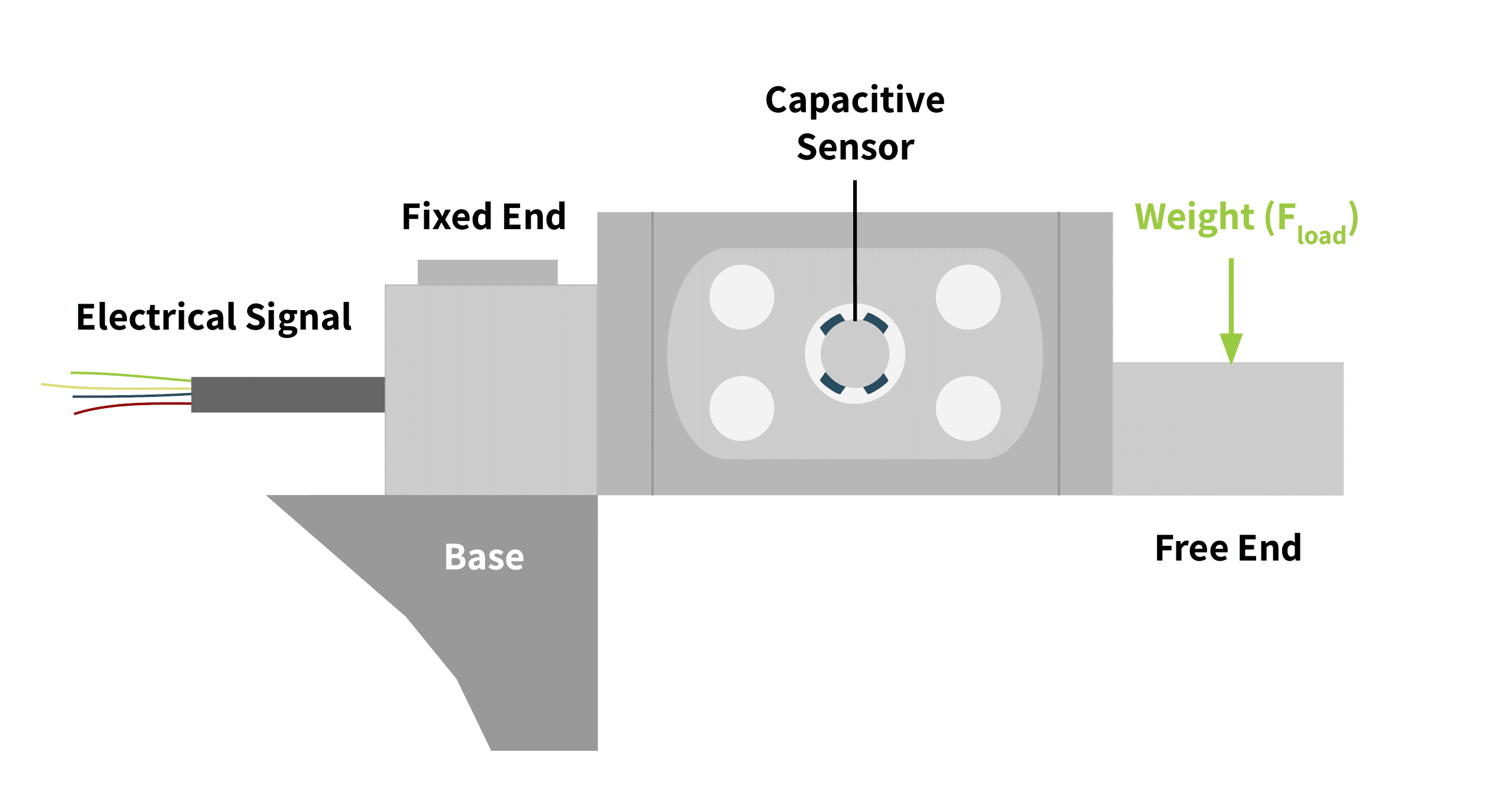
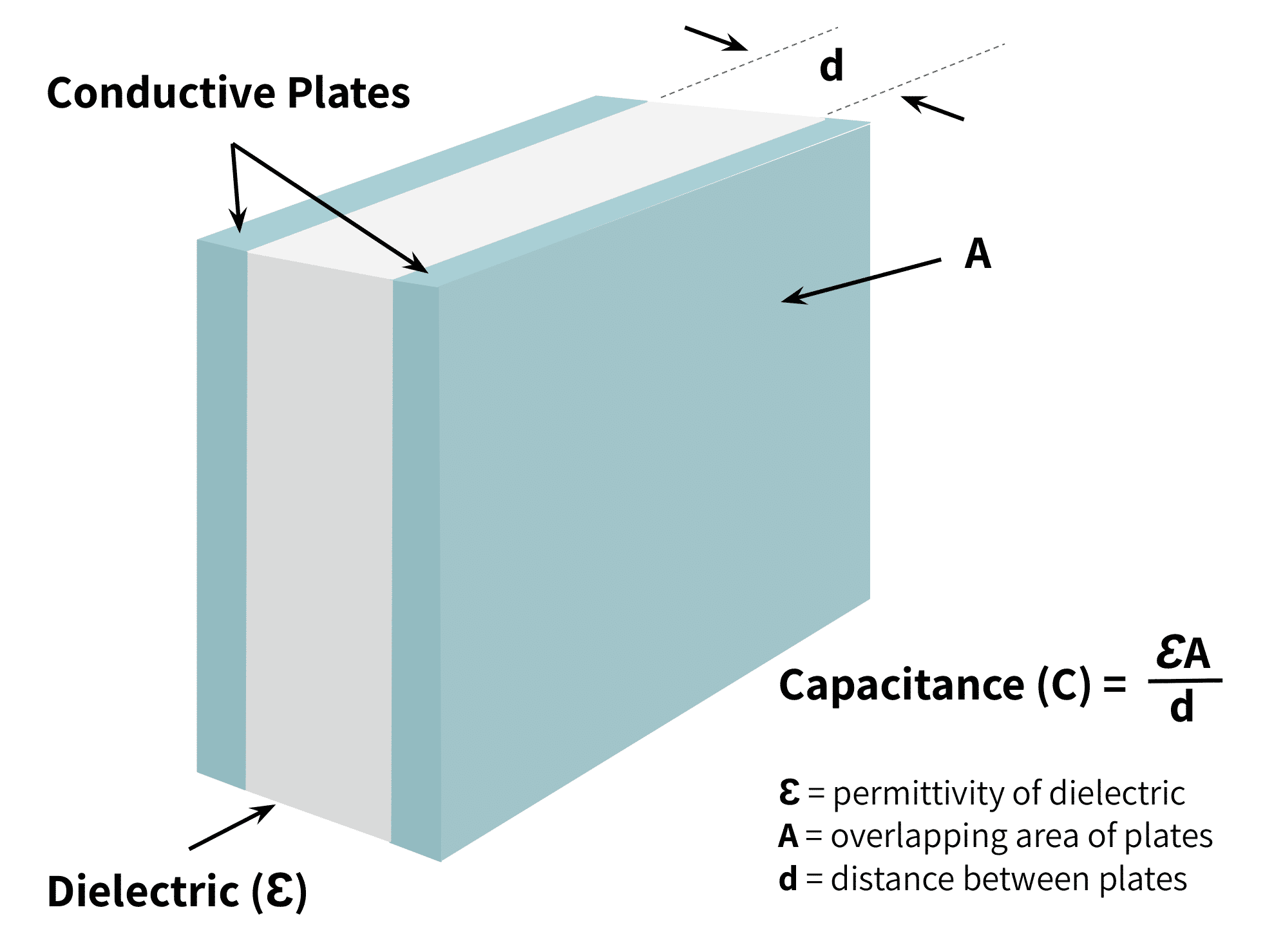
The principle of electrical capacitance, or the ability of a system to store an electric charge, drives this type of load cell. Their internal sensor consists of two parallel conductive plates separated by a small gap, filled with air or a dielectric material.
Under a load, the structure experiences a tiny deflection that narrows the gap between the plates. This, in turn, alters the device’s capacitance proportionally to the force. Internal electronics translate this change in the stored charge to the value displayed.
Capacitive load cells consist of:
- A loading platform external to the housing to apply the force
- An insulated housing containing a free moving and a fixed plate
- A dielectric material between the plates (which may be air)
- Electrical wires to the plates
- A rigid rod or connector between the loading platform and the free moving plate in the housing
Features, Advantages and Disadvantages of Capacitive Load Cells
The Advantages: Capacitive load cells are highly sensitive and accurate over a wide range of forces, large and small, and are resistant to side loads and overload. Their simple design makes them more cost-effective than other load cell types. Since they can be hermetically sealed without compromising their operation, they are an ideal choice for environments with frequent sterilization such as food and medical weighing applications.
The Constraints: While robust, the dielectric material between the plates can be sensitive to temperature fluctuations. This may require additional electronics for compensation. Additionally, the electronic signal can be susceptible to electrical noise if the cabling isn’t properly shielded, since the changes in capacitance are quite small. Like other passive transducers, capacitive load cells are impractical where an external power source is unavailable.
5. Piezoelectric Transducers: Measure Highly Dynamic Loads
Engineering Principles and Components of Piezoelectric Transducers
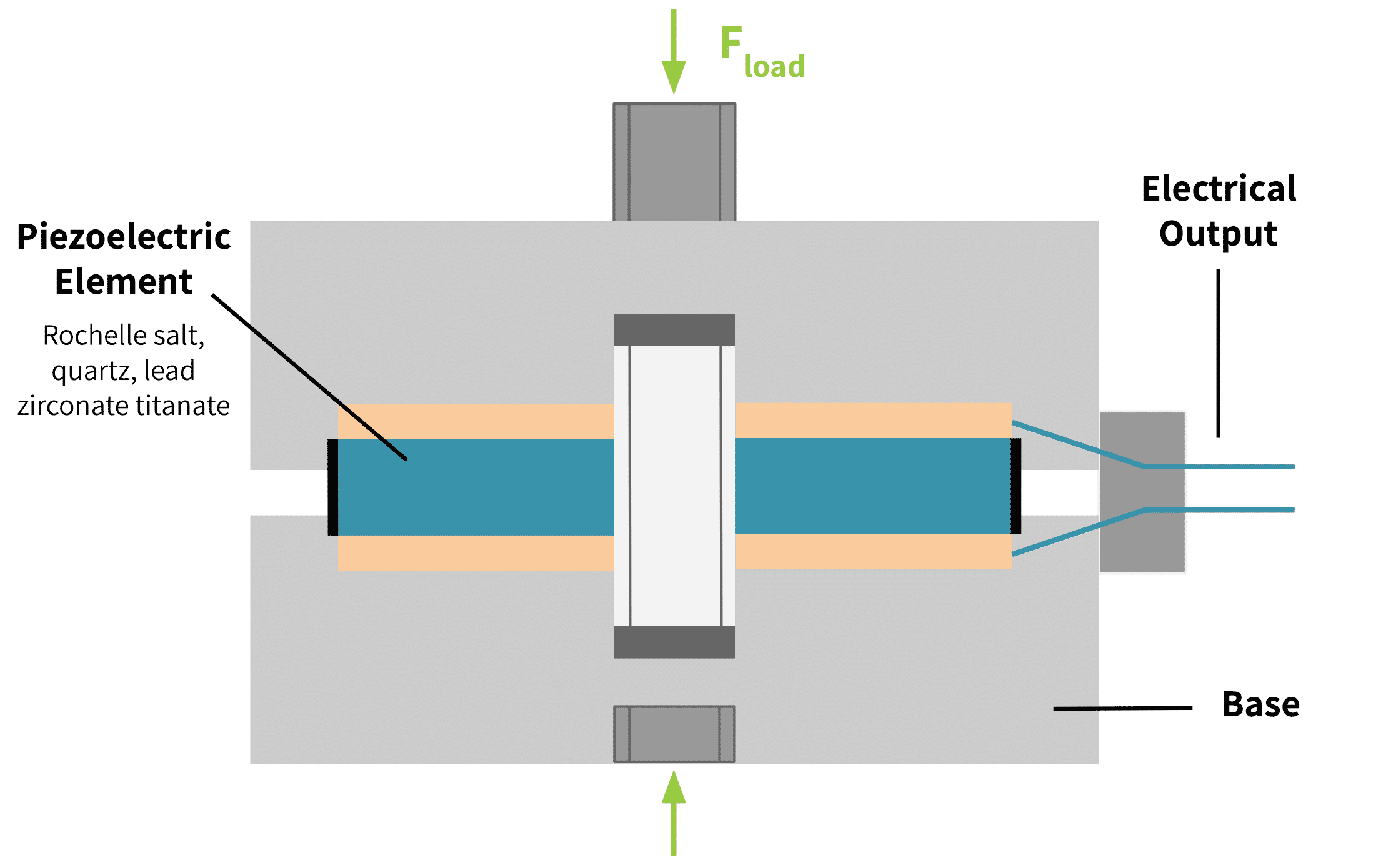
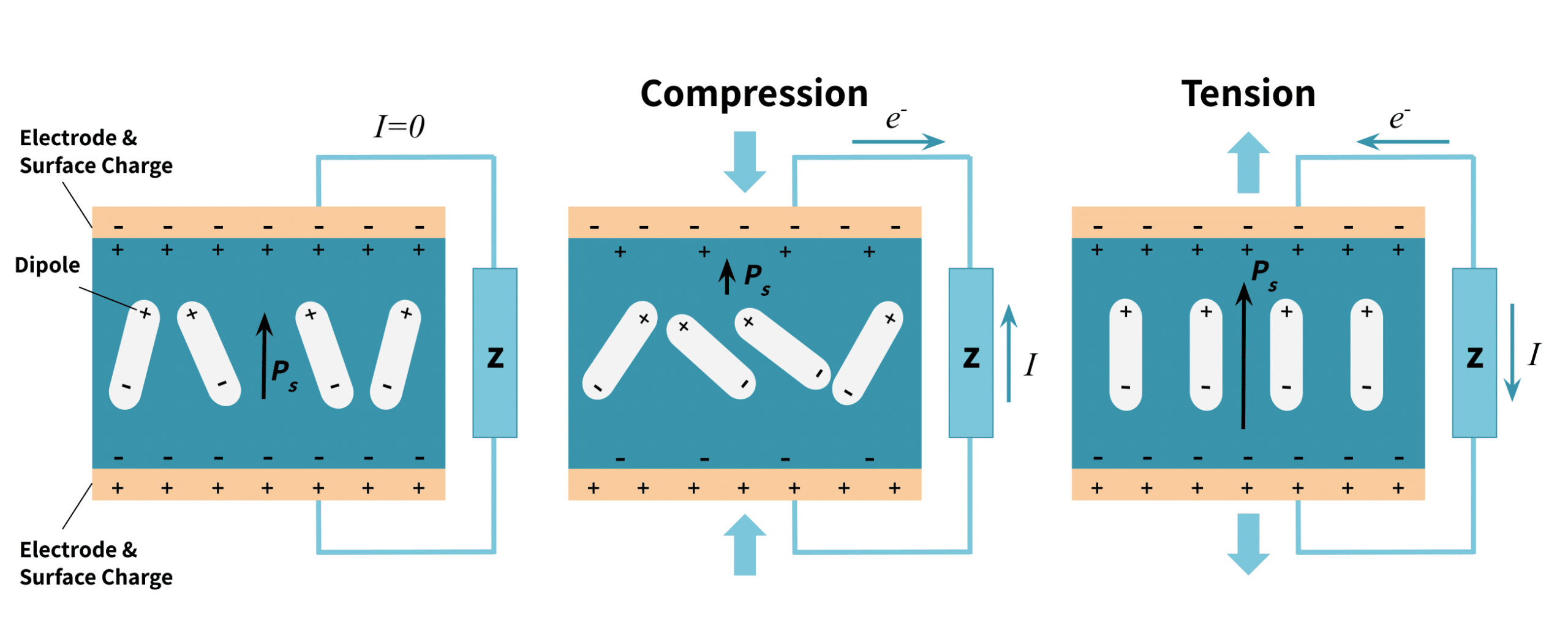
Piezoelectric sensors exploit the piezoelectric effect, a property found in some crystalline materials, such as quartz, or in specialized ceramics. Unlike passive sensors, these transducers generate their own electrical charge when under mechanical stress.
When a force deforms the crystal lattice, internal dipoles shift, creating a net electrical charge on the material’s surface. This charge is collected by metallic electrodes and converted into a voltage signal directly proportional to the load. Because the crystal is incredibly rigid, there is almost no deflection or movement involved, allowing the sensor to respond to changes in force nearly instantaneously. Note that both compressive and tensile forces can create this piezoelectric effect.
Piezoelectric load cells consist of:
- A loading platform or system to apply the force
- Metallic electrodes bonded to the piezoelectric material
- The piezoelectric material
- Output wires to measure a change in voltage caused by the change in charge
Features, Benefits and Disadvantages of Piezoelectric Transducers
The Advantages: These sensors are the go-to for measuring dynamic forces such as impacts, shocks, or vibrations. They are durable, compact, and accurate over a wide range of temperatures. As an active transducer that does not require an external power source to generate an output signal, it can be used for applications where an external power source is impractical. However, its output signal is weak and does require amplification. It is common in crash testing, ballistics, vibration monitoring, and industrial “press-fit” applications where the goal is to measure the peak force of a strike rather than the final weight of the object.
The Constraints: The piezoelectric effect occurs only for dynamic forces. Because the electrical charge “leaks” away over time, the signal will eventually return to zero even if the weight is still present. Therefore, these sensors cannot measure static loads.
Conclusion
A load cell is the heart of most sensor-based systems. While the five technologies described here represent the primary ways to quantify force, selecting the right one requires a holistic look at your environment, budget, and required precision.
Whether you need the high-frequency response of a piezoelectric sensor for impact testing or a rugged strain gauge for a legal-for-trade floor scale, the goal is the same: repeatable, reliable data. For more information, we suggest the following:
- For a closer look at the internal circuitry and diverse geometries of the industry’s most common sensor, read The Versatile Strain Gauge Load Cell.
- If you are looking for a strain load cell and not sure which type is best, consult our guide, Choosing the Right Load Cell for Your Job, to match the right spring element to your specific mechanical requirements.
- For information tailored to your project, contact Tacuna Systems engineers. We are happy to provide personalized engineering support.